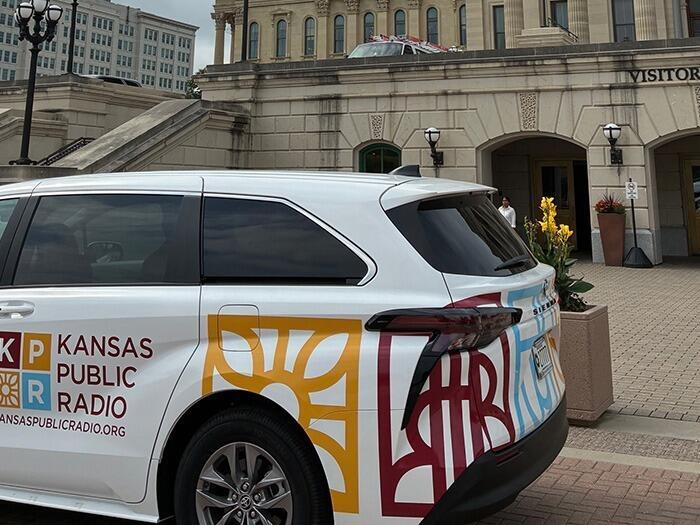
KPR on the road again with donor-funded vehicle
One Day One KU invests in the future of independent journalism by supporting Kansas Public Radio.
Kansas Public Radio has been broadcasting news and music for northeast Kansas since 1952. KPR has won the Kansas Association of Broadcasters’ Station of the Year Award 23 times since 1996, earning top honors more than any other radio or TV station in the state. This accomplishment is due in part to donors, as member support now makes up 97% of KPR's operating budget.
"KPR depends on donors for everything that we do, including producing local news stories, reporting on Kansas politics from the statehouse in Topeka, programming music programs including classical music and delivering those shows on radio frequencies across northeastern Kansas and online on our website and the KPR app," said Max Paley, major gifts coordinator for KPR.
Paley said KPR was reliant on individual staffers and its sister organization, Audio-Reader, to transport staff and equipment to cover the news and produce events within the station's listening area. "Our new station vehicle allows us to get out in the community for events, reporting, interviews, and more while saving the station money on a per-mile basis."
"Students help build the future of independent news in Kansas and beyond."
— Max Paley, Major Gifts Coordinator, KPR
KPR seeks to expand its newsroom to more University of Kansas journalism students to gain experience working for independent radio. The station also hopes to hire more top radio hosts to continue airing classical music. With additional donor support, this would be possible. "Students help build the future of independent news in Kansas and beyond," Paley said. "We want to make sure our founding mission and delivery of classical music on the airwaves since 1952 can continue, uninterrupted, at the highest level."
One Day One KU is back: On April 28-29, 2026 from noon to noon, join Jayhawks everywhere in helping the university we love to do extraordinary things — save the date!