Advancing Survivorship Care for Every Patient 
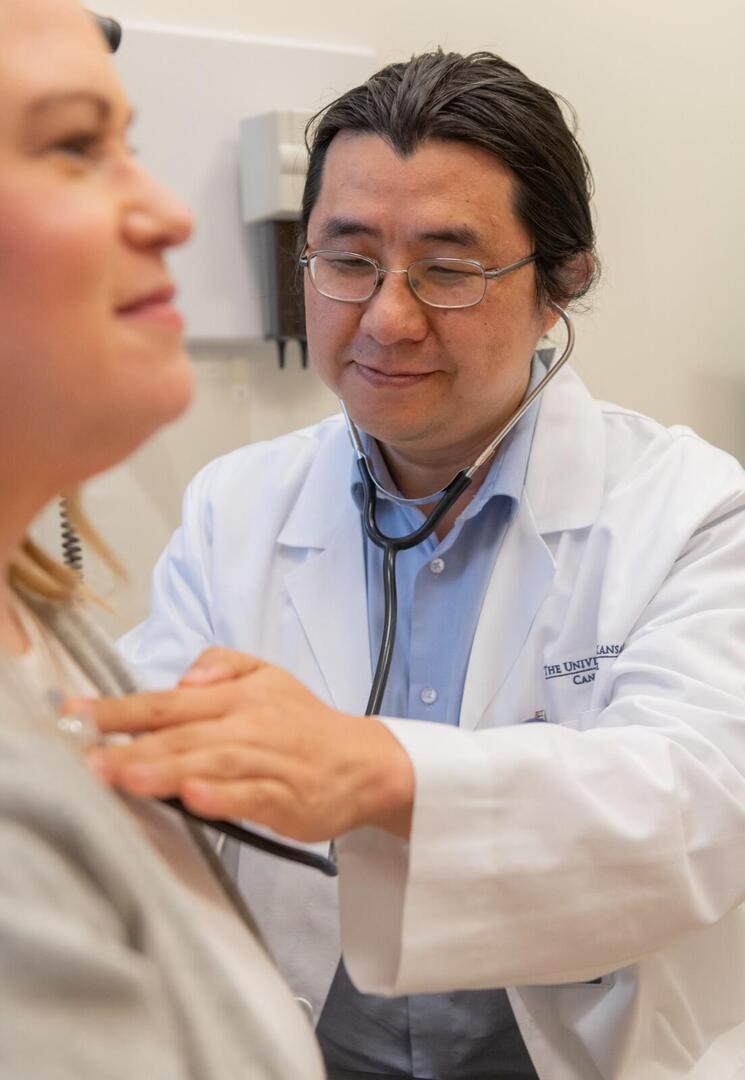
More than 18 million Americans are living with a history of cancer, and that number continues to rise as survival rates improve and the population ages. Yet survivorship remains one of the most significant unmet needs in cancer care. In just 18 months, The University of Kansas Cancer Center’s survivorship program has begun to reshape what life after cancer can look like, creating a new model that supports people before, during, and after treatment ends. Instead of waiting for challenges to appear, the Center for Survivorship and Patient-Oriented Research team uses regular assessments to identify physical, cognitive, emotional, nutritional and social needs early. More than 540 patients have enrolled, and the program continues to grow.

Under the direction of Anthony Sung, MD, the Center for Survivorship and Patient-Oriented Research is preparing for a major expansion as it moves beyond blood cancers. Genitourinary (including bladder, prostate and kidney cancers), breast, and head and neck cancers are among the likely first solid tumor groups to be added, all of which require significant investment in staff and space. Key priorities include:

  • More nurse navigators who can guide patients and caregivers from diagnosis through survivorship. The program will need 40 additional navigators to meet projected demand.
  • Expanded supportive care services such as onco-psychology, prehabilitation and rehabilitation, nutrition and financial counseling.
  • A dedicated survivorship clinic that brings these services together in one space.
  • Research infrastructure that helps evaluate the impact of these services and strengthens the case for insurance coverage. 
More about the Center for Survivorship and Patient-Oriented Research
The Center for Survivorship and Patient-Oriented Research is building the foundation needed to transform survivorship care. It has three interconnected programs that together improve lives, advance research and shape the future of care.

The Clinical Pre-, Peri-, and Post-Treatment Optimization Program (C-POP) is designed to enhance quality of life and function through assessment and intervention before, during and after treatment. Most cancer programs focus on treatments and medical comorbidities. This program expands that scope to evaluate physical function, cognitive function, mental health, diet and nutrition, food insecurity, financial toxicity and other social determinants of health. The goal of C-POP is to get our patients in the best shape possible.

The Observational Pre-, Peri-, and Post-Treatment Optimization Program (O-POP) gathers the data needed to drive the next generation of survivorship research. Participants volunteer to share insights through wearable devices, patient-reported outcomes and biospecimen collection. These tools help the team understand how treatment may affect daily life. Findings from O-POP lay the foundation for future interventional studies.

The Interventional Pre-, Peri-, and Post-Treatment Optimization Program (I-POP) tests new ways to improve patient outcomes. These studies explore strategies such as personalized, remotely monitored exercise programs, nutrition and microbiome-based interventions and other approaches that can change the course of recovery. One example is the NOURISH trial, which is funded by the National Institutes of Health (NIH) and led by KU Cancer Center physicians and researchers. The goal is to establish healthcare-community partnerships around the country that provide medically tailored groceries to people with cancer facing food insecurity. This study is a direct result of findings from C-POP and O-POP that linked food insecurity and malnutrition to worse cancer outcomes. 


Not finding the cause you're searching for? Click HERE and write in your 
own designation in the "other purpose" field.